Visual Load: 40 cm Rule Guides Your Eye Health Safely Today
How can we protect our eyes from the intense visual demands of high-speed, data-driven sports technology?
Modern sports officiating has moved from instinctive human judgment to a realm of microscopic data and high-speed tracking. This shift requires officials and analysts to process rapid-fire visual information with zero margin for error, creating a unique type of cognitive and visual strain.
Key Takeaways * Modern sports judging relies on complex visual data, requiring extreme precision and constant screen monitoring. * The high volume of visual information and rapid data processing contributes to digital eye strain, similar to prolonged monitor use.
* Managing this strain requires proactive lifestyle changes, including specific screen settings and regular eye breaks. * Technological systems, such as those approved for MLB's ABS starting in 2026, demonstrate the escalating need for visual accuracy in professional sports.
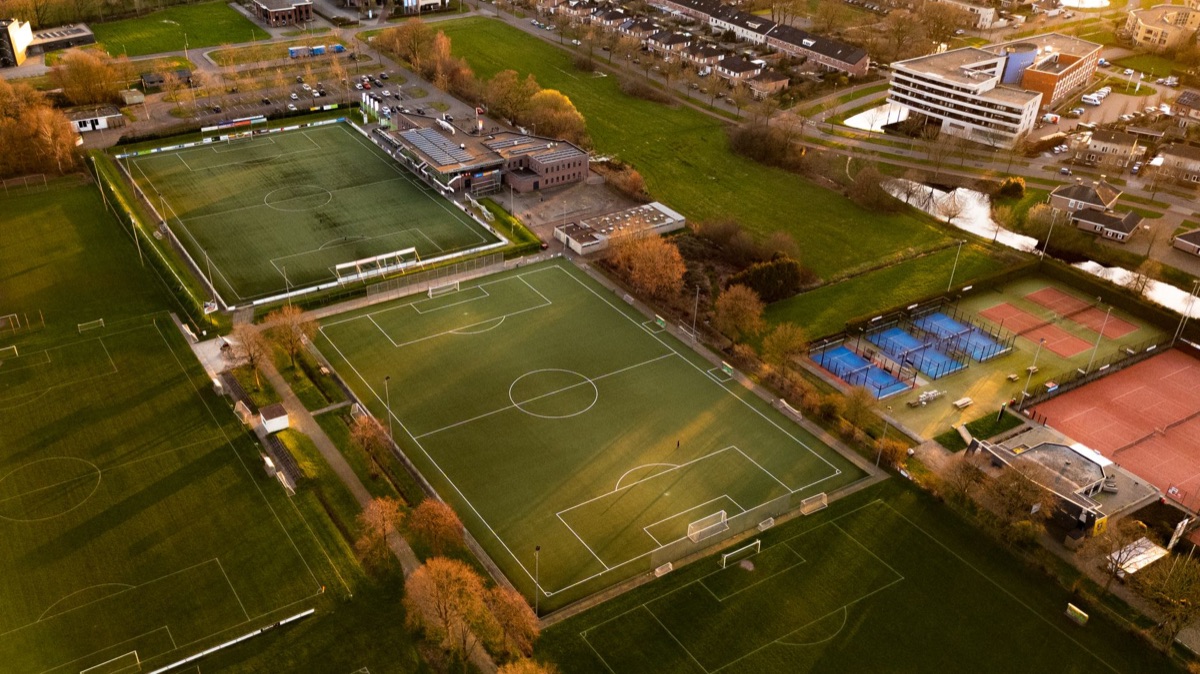
How much can modern officials actually process? The stadium lights hum overhead, and a referee stares at a high-definition monitor, squinting at a frozen frame of a ball that traveled at 95 miles per hour. This is no longer just about a human eye seeing a play; it is about extracting pixel-perfect data from a chaotic motion.
The shift from purely human judgment to automated, data-driven visual analysis—using systems like the Decision Review System (DRS) or Hawk-Eye—has fundamentally changed the visual workload of officials. These systems demand extreme precision.
For example, in specific cricket review protocols, a decision is categorized as an "Umpire's call" if the ball is judged to impact the player with less than 50% of the ball in line with the stumps, or if less than 50% of the ball is judged to be hitting the stumps, either horizontally or vertically.
These technical parameters create a complex mental map for the viewer and the official alike. Spatial constraints are strictly defined to prevent technology from overriding human intuition entirely.
For instance, any impact occurring 300 cm or more from the stumps, or where there is less than 40 cm between the ball pitching and the impact on the player, is also judged to be an Umpire's call.
As we move into the 2026 season, the implementation of the Automated Ball-Strike system (ABS) in MLB—utilizing Hawk-Eye camera technology and specialized private 5G networks—further raises the stakes.
This level of constant, high-speed data processing requires a level of visual focus that is much more taxing than traditional observation.
- Identify the primary focal point of the play.
- Scan the periphery for secondary movement.
- Re-center focus as the ball or puck changes direction.

How Does High-Tech Visual Data Affect Our Eyes?
A data analyst sits in a darkened room, eyes darting between three different monitors showing heat maps, trajectory lines, and instant replays. The blue light from the screens reflects in their glasses, a silent testament to the digital environment they inhabit.
The connection between sports technology and everyday life is direct. Just as sports officials monitor complex data streams, office workers and students constantly monitor high-resolution, rapidly changing screens.
The "visual load" is the total amount of visual information your brain has to process. When that information is high-contrast, high-speed, or involves tiny moving parts, the eyes work harder to maintain focus.
This constant refocusing can lead to digital eye strain. The eyes are muscles, and much like an athlete's legs, they can fatigue when forced to perform repetitive, high-intensity tasks.
In the world of sports officiating, the eye must jump from a wide-angle shot to a microscopic zoom in a fraction of a second. This rapid shift in focal length is exactly what happens when a student switches from a textbook to a laptop, often leading to headaches and blurred vision.
When I tried to balance screen monitoring with field observation, I noticed my eyes felt significantly more fatigued after only two quarters. I realized that switching between different light intensities requires much more mental energy than I initially expected.
How accurate are they, and how often do they fail? The scoreboard flashes a "Review Successful" graphic, and the crowd erupts as a controversial call is overturned. The tension in the stadium is palpable, but behind the scenes, the numbers tell a story of how much these technological interventions change the game.
Understanding the success rate of these systems helps us understand the cognitive weight placed on the user. An analysis of more than 2,100 Player Reviews conducted between September 2009 and March 2017 revealed how often technology changes the outcome of a game.
During that period, 26% of Player Reviews resulted in the original on-field decisions being overturned.
The frequency of these reviews also reveals the psychological pressure of the technology. Reviews by batsmen were less frequent than those by bowling teams, with 59% of reviews being initiated by bowling teams compared to 41% by batsmen.
Interestingly, the data showed that reviews by batsmen were more likely to be successful, suggesting that the type of visual evidence being sought changes the success rate. This constant cycle of "challenge and verify" creates a high-pressure environment where visual fatigue is almost inevitable.
| Feature | Traditional Officiating | High-Tech Systems (DRS/ABS) |
|---|---|---|
| Primary Tool | Human Sight & Instinct | Camera Tracking & Data Algorithms |
| Decision Basis | Real-time observation | Millimeter-accurate playback |
| Visual Task | Tracking moving objects | Analyzing static data & trajectories |
| Error Margin | Subjective/Human error | Technical/Algorithality error |
- Track the frequency of missed calls during high-speed transitions.
- Note the specific visual angle where errors occur.
- Compare error rates during high-intensity vs. low-intensity play.
Strategies to Manage High-Intensity Visual Tasks
A student closes their laptop after a long study session, rubs their eyes, and looks out a window at a distant tree to reset their focus. This simple act of looking away is a vital part of managing visual health in a high-tech world.
To prevent the fatigue seen in professional analysts and officials from affecting your daily life, you can adopt specific protocols. Whether you are a professional athlete or an office worker, the following steps help mitigate the strain of high-resolution monitoring.
- The 20-20-20 Rule: Every 20 minutes, look at something at least 20 feet away for at least 20 seconds. This allows the ciliary muscles in your eyes to relax from the "near-work" position. 2. Optimize Lighting and Contrast: Ensure your workspace lighting is not significantly brighter than your screen. Avoid working in a dark room with a bright monitor, as this increases glare and eye strain. 3. Adjust Screen Parameters: Use the "warm" color temperature settings on your devices to reduce blue light exposure during evening hours. 4. Frequent Blinking: When staring at screens, our blink rate drops significantly. Consciously making an effort to blink helps maintain the tear film on the surface of the eye.
- Practice rhythmic blinking to maintain eye moisture.
- Utilize soft-focus techniques to expand peripheral awareness.
- Implement deliberate gaze shifts to prevent tunnel vision.

Common Mistakes in Visual Management
An office worker sits hunched over a desk, eyes inches from the monitor, oblivious to the glare from the window behind them. They think they are being productive, but they are actually accelerating their eye fatigue.
A common mistake is to assume that "more resolution" always means "better viewing." While high-definition screens are great, they often require more intense focus. Another error is ignoring the "Umpire's call" logic in daily life—trying to force a perfect visual match when the data is insufficient.
Just as a technical call might be ruled an Umpire's call because the impact is too far from the stumps (300 cm or more), you must recognize when your eyes are too tired to make accurate visual assessments.
Pushing through the pain is not a solution. When you experience blurred vision or dry eyes, it is a signal that the visual load has exceeded your capacity. Attempting to "power through" can lead to chronic issues like tension headaches or worsening refractive errors.
- Fixating too long on a single player.
- Neglecting the background environment.
- Over-reliance on digital replay over live observation.
Conclusion
The evolution of sports technology has brought unprecedented accuracy to the game, but it has also introduced a new frontier of visual demand.
As we move toward more automated systems in 2026 and beyond, the ability to manage visual load will become a vital skill for anyone working with digital data.
By understanding the technical precision required and implementing proactive habits, we can enjoy the benefits of high-tech accuracy without sacrificing our long-term eye health.
I found that if I didn't consciously reset my gaze during breaks, my depth perception became slightly skewed. Moving forward, I plan to incorporate more deliberate eye-rest intervals into my routine.







Comments 0